Conclusion first: Explain the relationship between upstream load reduction and HEPA filter life. For the question "medium-efficiency filter protects HEPA filter," the safest approach is to first confirm the installation location, project documents, and on-site data, then judge under comparable operating conditions; do not draw conclusions based solely on product names, a single numerical value, or a fixed date.
1. Clarify the applicable boundaries of the question
This is a basic but easily oversimplified question. The purpose of understanding the principle is not to memorize an isolated parameter, but to know with which system conditions that parameter should be interpreted.
For the discussion "medium-efficiency filter protects HEPA filter," we recommend first placing the product or concept in the actual position of the intermediate filter stage in the air handling unit and the protection stage upstream of the HEPA section. Balance resistance, dust-holding capacity, and downstream HEPA-stage protection. When comparing, first consider the filtration or equipment function it carries, then compare rated conditions, installation space, sealing method, and subsequent maintenance conditions. This yields a selection logic appropriate for the current system rather than an absolute conclusion divorced from context.
For any intermediate filter stage in an air handling unit and protection stage upstream of the HEPA section, product parameters must be interpreted together with the actual installation location, system airflow, upstream/downstream conditions, and on-site management requirements. Especially for controlled environments, continuous operation, or change-managed scenarios, use this article as a communication and inspection framework, and determine final actions based on approved project documents, equipment data, and on-site measurements.
2. What information should you check on site?
| Inspection dimension | Items to verify | Common misconceptions |
|---|---|---|
| Specifications and site conditions | Confirm dimensions, rated airflow, efficiency or functional requirements, installation structure, and maintenance accessibility. | Avoid assuming that similarly named or similarly sized products are directly interchangeable. |
| Operating data | Record baseline condition and observe differential pressure, airflow, equipment operation, or area status under comparable operating conditions. | A single reading should not be interpreted without considering fan speed, damper positions, and upstream load. |
| Installation and sealing | Check orientation, positioning, clamping, sealing elements, and frame/track condition. | Distinguish between issues in the filter media itself and bypass leakage. |
| Maintenance closed loop | Keep records of inspections, corrective actions, replacements, and any required re-tests. | Before clearing an abnormal condition, confirm the system has been restored to project-required status. |
From a data management perspective, baselines and trends are more valuable than a single "high" or "low" reading. Any abnormal reading should be rechecked under the same or comparable operating conditions — for example fan speed, damper position, operating period, upstream filter condition, and instrument tapping conditions. Only then can maintenance personnel distinguish a real load change from measurement or system condition changes.
3. Recommended inspection and handling procedure
Confirm boundaries. First review project documents, equipment manuals, and on-site maintenance procedures to clarify the purpose of the check or task, allowable operating conditions, and safety requirements.
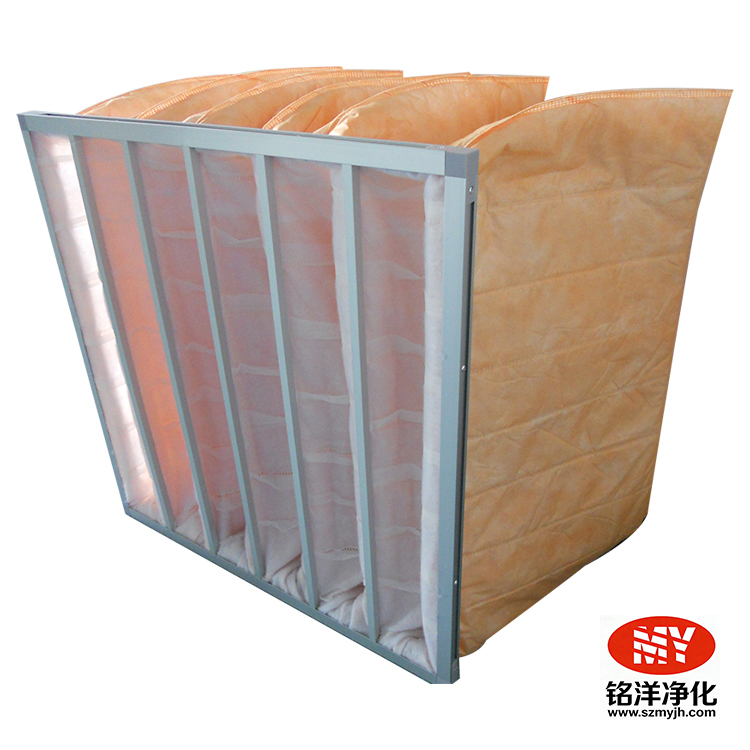
Collect baseline. Record bag or filter cartridge form, frame sealing, clamping status, differential pressure trend, rated airflow, and upstream operating condition; if there is no historical baseline, establish a comparable initial dataset first.
Layered verification. Verify step by step from upstream environment, equipment condition, filter or component appearance, installation sealing, to downstream performance — avoid skipping basic checks and jumping to conclusions.
Implement corrective actions. When replacement or adjustment is required, verify product specifications and installation orientation, and control contamination, mechanical stress, and foreign material risks during disassembly and reassembly.
Restore and record. After completion, check system restored condition; in scenarios requiring verification, arrange corresponding airflow, integrity/leak test, or environmental performance rechecks per project documents.
For products that must be replaced, verify model, dimensions, rated airflow, filtration class or function, frame, and sealing method before disassembly. For nonstandard requirements, provide installation drawings, tracks or clamping methods, equipment location, and maintenance clearance information. Installation completion does not equal task completion — post-installation data verification, site cleanup, and recordkeeping are essential parts of the maintenance closed loop.
4. How does this connect with related products or solutions?
This topic can be understood in conjunction with the existing F7 medium-efficiency filter and mini-pleat HEPA filter. Front-end filtration, intermediate filtration, terminal filtration, and cleanroom equipment each carry different roles; when selecting, modifying, or confirming nonstandard sizes, we recommend organizing on-site parameters and consulting technical personnel. Technical recommendations should be based on actual operating conditions, not substituting generic articles for on-site confirmation.
5. Frequently asked questions
Can it be handled only on a fixed schedule?
Not recommended. Combine project documentation, equipment manuals, differential pressure trends, airflow or environmental capability, installation condition, and abnormal events to make a judgment; a fixed schedule can be used only as a trigger for planned inspections and cannot replace on-site confirmation.
Must an abnormality be replaced immediately?
First confirm the nature and risk level of the abnormality. For cases involving physical damage, moisture, obvious bypass leakage, or conditions that may affect the controlled environment, isolate per on-site procedures and organize an assessment; for abnormal instrument readings, also verify instruments, fans, dampers, and upstream/downstream filter conditions.
What maintenance records should be kept at minimum?
It is recommended to retain equipment or location, product model and lot, dimensions and rated parameters, installation date, initial pressure drop, inspection readings, abnormal handling, replacement personnel, and any required re-test results, forming a traceable closed loop.
6. Conclusion
The core of "Why does a medium-efficiency filter protect a HEPA filter? Load distribution in three-stage filtration" is not to find a decontextualized standard answer, but to establish a repeatable, traceable, and closable judgment method. Verify bag or filter cartridge form, frame sealing, clamping status, differential pressure trend, rated airflow, and upstream operating condition, and link technical specifications, on-site condition, and maintenance records to provide more reliable support for stable system operation.
References and scope of use
This article is intended for technical communication and maintenance planning of air filters and cleanroom equipment, and does not replace project design documents, equipment manuals, on-site risk assessments, or applicable regulations and quality system requirements. Cleanroom cleanliness classification ranges can be referenced in ISO 14644-1; HEPA filter testing and performance information can be cross-checked with EN 1822 / ISO 29463 related guidance.