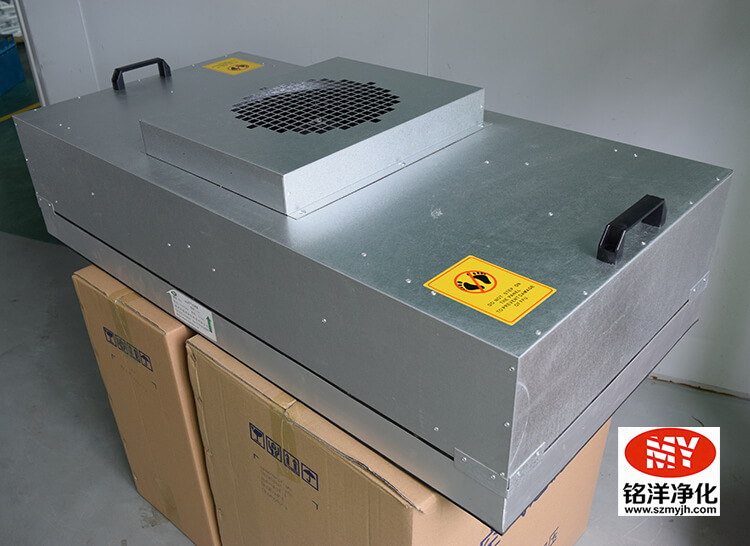
Many novice cleanroom engineers, when designing a cleanroom plan for the first time, easilyFFU Fan Filter UnitErrors in selection. Either airflow mismatch leads to cleanliness acceptance failure, or only focusing on low procurement price, only to discover after production starts a series of problems like high noise, fast filter consumption, and high electricity bills. Based on years of on-site experience in cleanroom implementation, I will explain in plain language the three most common pitfalls in selection, and share three practical selection approaches that newcomers can directly reference when making plans.
I. 3 Common Pitfalls for Novices in Selection
Myth 1: Blindly increase airflow, thinking more margin is safer.
Many newcomers worry about filter dust accumulation and airflow decay over time, so they directly choose large FFU models far exceeding calculated requirements. While this seems to leave ample margin, it actually brings many problems. Fan power consumption is linked to airflow; upgrading to a larger size significantly increases electricity usage. When multiple units run simultaneously in a workshop, cumulative noise can severely exceed standards, disrupting normal operations. Additionally, excessive airflow can disrupt unidirectional flow in the cleanroom, creating turbulence that stirs up dust and compromises the clean environment.
Myth 2: Blindly pursue high-grade filters without considering actual workshop conditions.
Many people think higher filter grade is better, even for Class 100,000 general assembly workshops, directly equipping U15 ULPA filters. ULPA filters have much higher procurement and replacement costs than H13/H14, and have greater resistance, increasing fan load; if workshop dust and pollutant concentrations are low, high-grade filter media is overkill, wasting both consumables and electricity, completely unnecessary.
Myth 3: Only compare initial purchase price, ignoring motor and long-term maintenance costs.
AC FFUs have a lower unit price and are often preferred for projects with tight budgets, but their long-term operation has significant drawbacks. AC motors have high energy consumption, cannot precisely adjust frequency for speed control, and have shorter fan lifespans; EC variable frequency models are more expensive upfront but can save 30%-50% energy, with adjustable airflow, and the cost difference can be recovered in about two years. Focusing only on initial procurement costs while ignoring subsequent electricity bills and replacement parts expenses leads to higher long-term investment.
II. 3 Practical Selection Approaches for FFU Fan Filter Units, Ready for Novices to Apply
Approach 1: Accurately calculate airflow based on cleanliness class, leaving only a small static pressure margin.
First, calculate the overall ventilation demand based on workshop area, ceiling height, and ISO cleanliness class, then match it with the rated airflow of a single FFU. For Class 100 ISO5 workshops, air changes are 200-300 times/hour; for Class 10,000 ISO7, control at 60-100 times/hour; for Class 100,000 ISO8, take 20-40 times/hour. After calculation, only reserve a 15%-20% airflow margin, without deliberately enlarging the specification.
At the same time, focus on checking the fan external static pressure, which needs to cover the entire resistance range from new filter to dust-clogged condition. It is recommended to choose a model with static pressure ≥180Pa to prevent rapid airflow drop after filter dust accumulation, maintaining stable workshop airflow.
Approach 2: Grade filter selection based on working conditions, choose HEPA/ULPA as needed.
Follow the principle of graded selection: for ordinary electronic assembly and food packaging cleanrooms at Class 100,000, pair withH13 HEPA FilterCompletely sufficient; for chip placement, optical inspection in Class 10,000 clean areas, choose H14; only for wafer etching, high-precision laboratories in Class 100 ultra-high clean scenarios, is U15 ULPA ultra-high efficiency filter needed.
Prioritize FFUs with liquid tank seal structure, ensuring tight filter fit without air leakage, avoiding cleanliness failure due to frame leakage, and saving the cost of later rework and leak detection.
Approach 3: For long-term production workshops, prioritize EC variable frequency motors for quiet operation and energy savings.
For factories operating 24/7 year-round, directly choose EC brushless variable frequency FFUs. They support 0-10V, RS485 group control, can adjust fan speed in real-time based on workshop cleanliness, reduce frequency during idle periods to save power; under normal conditions, noise can be controlled within 55dB, and multiple units installed side by side will not exceed noise standards.
For short-term temporary clean tents or low-frequency simple workstations, consider low-cost AC models, balancing budget and usage duration. When selecting, remember to request third-party noise and energy consumption test reports to prevent merchants from falsifying parameters.
III. Final Selection Tips
1. Pre-calculate ceiling load capacity. A standard FFU weighs 30-50 kg per unit. Confirm the load-bearing capacity of the ceiling grid to avoid deformation.
2. Reserve space for filter replacement. Prioritize bottom-pull FFUs to avoid scaffolding during filter changes, saving labor.
3. Unify communication protocols for centralized control of multiple FFUs, facilitating integration into the workshop intelligent control system.
Summary
Well DoneFFU Fan Filter Unit SelectionThe key is to abandon the one-sided ideas of 'bigger is better, higher grade is better, cheaper unit price is better', and comprehensively balance workshop cleanliness class, operating hours, and long-term maintenance costs. By following the three-step approach of airflow calculation, filter grading, and motor selection, most common pitfalls for newcomers can be avoided, ensuring stable compliance of cleanroom cleanliness indicators. Deeply rooted in the purification industry for 18 years,Mingyang PurificationThe full series of FFU fan filter units come with complete parameters, support group control customization, and undergo full factory testing. Free working condition calculations and one-on-one selection solutions are available.