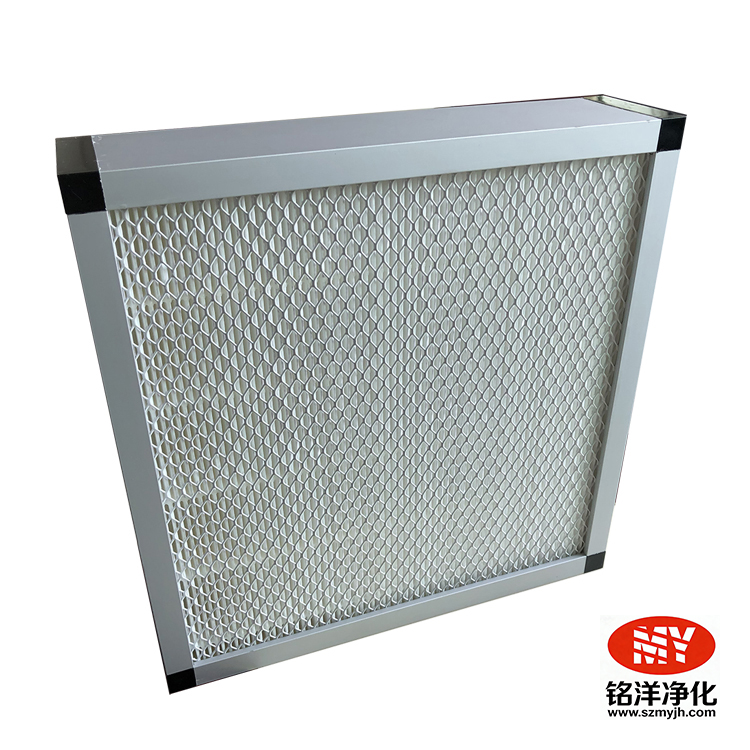
Quick conclusion: Answer the selection question based on project requirements rather than simply pursuing a higher class. For the question "Differences between H13 and H14 HEPA filters," the safest approach is to first confirm the installation location, project documentation, and on-site data, then judge under comparable operating conditions; do not draw conclusions solely from a product name, a single number, or a fixed date.
1. Define the scope of the question first
Selection should be driven by on-site requirements rather than choosing a product that merely appears to be a higher class or a lower price. Size, airflow, resistance, mounting structure and maintenance accessibility must all be cross-checked.
When handling requirements such as "Differences between H13 and H14 HEPA filters," purchasers or technical staff should compile the installation location, actual airflow, dimensions, efficiency, initial pressure drop, frame or sealing structure, environmental conditions and maintenance window into the same specification sheet. For these scenarios, treat filtration efficiency, system resistance, installation sealing and on-site verification as a single managed set. If there are gaps in information, they should be filled before ordering or modifying, not resolved by on-site trial-and-error during installation.
In any cleanroom terminal, HEPA supply outlet, fan filter unit (FFU), or high-grade air handling section, product parameters must be understood in conjunction with actual installation location, system airflow, upstream and downstream filter stages, and on-site management requirements. Especially for controlled environments, continuous operation, or change-managed scenarios, use this document as a communication and inspection framework and then confirm final actions with approved project documents, equipment data and on-site measurements.
2. What information should you check on-site?
| Inspection dimension | Items to verify | Common misconceptions |
|---|---|---|
| Specifications and on-site conditions | Confirm dimensions, rated airflow, required efficiency or function, mounting structure and maintenance accessibility. | Avoid treating similarly named or similarly sized products as directly interchangeable. |
| Operating data | Record initial condition and observe differential pressure, airflow, equipment operation or area status under comparable conditions. | A single reading should not be interpreted apart from fan frequency, valve positions and upstream load. |
| Installation and sealing | Inspect orientation, positioning, clamping/tightening, seals and frame/rail condition. | Distinguish between filter media defects and bypass leakage. |
| Maintenance closed-loop | Keep records of inspections, actions, replacements and any required re-testing. | Before shutting down for anomalies, confirm the system has been restored to the project-required state. |
From a data-management perspective, baseline values and trends are more valuable than a single “high” or “low” reading. Any abnormal reading should be rechecked under the same or comparable operating state — for example fan frequency, valve position, operating period, upstream filter condition and instrument tapping method. Only then can maintenance personnel distinguish a real load change from measurement error or system condition changes.
3. Recommended inspection and action workflow
Confirm boundaries. First review project documents, equipment manuals and on-site maintenance procedures to clarify the objective of this check or work, allowable operating conditions and safety requirements.
Collect a baseline. Record product labels and documentation, the frame and seals, clamping/tightening, differential pressure trend, airflow and re-test results against project requirements; if no historical baseline exists, establish a comparable initial dataset first.
Layered verification. Verify upstream environment, equipment condition, filter or component appearance, installation seals and downstream performance item by item — avoid skipping basic conditions and jumping to conclusions.
Implement actions. When replacement or adjustment is required, verify product specifications and installation orientation, and control contamination, mechanical stress and leftover debris during removal and installation.
Restore and record. After completion, check system restoration status; for scenarios requiring verification, perform the specified airflow, integrity/leak test or environmental performance re-check according to project documents.
For filters to be replaced, verify model, size, rated airflow, filtration class or function, frame and sealing type before disassembly. For non-standard requirements, supplement with installation drawings, rails or clamping methods, equipment location and maintenance clearances. Installation completion does not equal job completion — verifying restored data, clearing the work area and recording are essential to close the maintenance loop.
4. How this relates to other products or solutions
This topic can be understood in connection with existing mini-pleat HEPA filter and separator-type HEPA filter pages. Pre-filters, medium stages, terminal filtration or clean equipment each have different roles; when selecting, modifying or confirming non-standard sizes, collect on-site parameters and consult technical staff. Technical recommendations should be based on actual operating conditions, not used to substitute for on-site confirmation.
5. Frequently asked questions
Do I have to replace the filter immediately when an anomaly appears?
First confirm the nature and risk level of the anomaly. For cases involving physical damage, moisture exposure, obvious bypass leakage or conditions that may affect the controlled environment, follow on-site procedures to isolate and organize evaluation; for anomalous readings, also verify instruments, fans, valves and upstream/downstream filter status.
What maintenance records should be kept at minimum?
It is recommended to retain equipment or installation location, product model and batch, dimensions and rated parameters, installation date, initial differential pressure, inspection readings, anomaly handling, replacement personnel and any required re-test results to form a traceable closed loop.
Can I handle it solely on a fixed periodic schedule?
Not recommended. Decisions should combine project documentation, equipment manuals, differential pressure trends, airflow or environmental performance, installation status and incident history; fixed intervals should only serve as scheduled inspection triggers and cannot replace on-site confirmation.
6. Closing remarks
The core of "How to choose H13 and H14 HEPA filters? Efficiency class, system resistance and application matching" is not to find a one-size-fits-all answer detached from context, but to establish a repeatable, traceable and closable decision process. Verify around product labels and documentation, frame and seals, clamping/tightening, differential pressure trends, airflow and re-test results against project requirements, and link technical specifications, on-site condition and maintenance records to better support stable system operation.
References and scope of use
This article is intended for technical communication and maintenance planning of air filters and clean equipment; it does not replace project design documents, equipment manuals, on-site risk assessments or applicable regulations and quality system requirements. Cleanroom air cleanliness classes can be referenced in ISO 14644-1; product testing and performance documentation for HEPA filters can be cross-checked with EN 1822 / ISO 29463 related guidance.